“Plus Venus in Purva Phalguni. So this means that this is a time to set your intention, to review and focus on what is fun in your life. What sets your inner child on fire. You know, Leo in general loves to love, you know, playful are playful. They love playing with children. You know, they like to party. You know, so yeah, now it’s a good time to ask yourself, what would fill your heart with joy? What what would fill your heart with love and courage?”
The Degrees of the Nakshatras: Tropical-Western zodiac and Indian-Sidereal-Vedic zodiac in Astrology
The Nakshatras are one of the most fascinating features of Vedic astrology. While the twelve zodiac signs divide the zodiac into twelve large sections, the Nakshatras divide the zodiac into 27 smaller lunar sections, each carrying its own symbolism, qualities, talents and divine association.
But there is an interesting question for astrologers who work with both Western and Vedic astrology:
Where exactly do the Nakshatras fall when we compare Sideral (Indian/Vedic) degrees with Tropical (Western) degrees?
The answer reveals a significant difference between the two zodiac systems.
This guide provides a complete reference to the 27 Nakshatras and their corresponding Vedic and Western zodiac degrees, making it easier to see how the two systems relate to one another.
What Is a Nakshatra?
In Vedic astrology, the zodiac is divided into 27 Nakshatras, also known as lunar mansions.
The Nakshatras form a wheel around the zodiac and are associated with the Moon’s journey through the sky. According to the traditional symbolism, the 27 Nakshatras are connected with the Moon’s 27 wives, representing different lunar shaktis, or feminine energies in Hindu tradition and Vedic astrology. This is a metaphorical story to represent the sidereal motion of the moon. Chandra is the Moon and his wives are nakshatras (lunar mansions). Because the Moon moves through the Nakshatra wheel approximately once every 27 days, it passes through a different Nakshatra approximately each day.
“Hindu astrology: The primary system of Hindu astronomy and astrology (jyotisha) is based on the system of nakshatras, or constellations, which have been in use since the Vedic period. The 27 nakshatras are lunar mansions through which the Moon passes along the ecliptic, each measuring an arc of 13° 20? of the ecliptic. Each of the 27 nakshatras corresponds to approximately one day of a 27-day lunar month. The system is a form of sidereal time—time measured as the motion of Earth against the fixed stars. The location of the Moon in this cycle of nakshatras at the time of one’s birth is considered to be one’s nakshatra, and that sign is thought to be determinative of a person’s personality, career, relationships” britannica.com
Each Nakshatra has its own symbol, characteristics, special talents, deity, spiritual qualities, area of expression. There is also a traditional 28th Nakshatra, Abhijit, although it is generally not used when dividing the zodiac into 27 equal sections.
Why are The Vedic and Western Degrees Different?
One of the most important things to understand when working with Nakshatras is that Vedic and Western astrology use different zodiac reference points. Vedic astrology traditionally uses the sidereal zodiac, while Western astrology commonly uses the tropical zodiac.
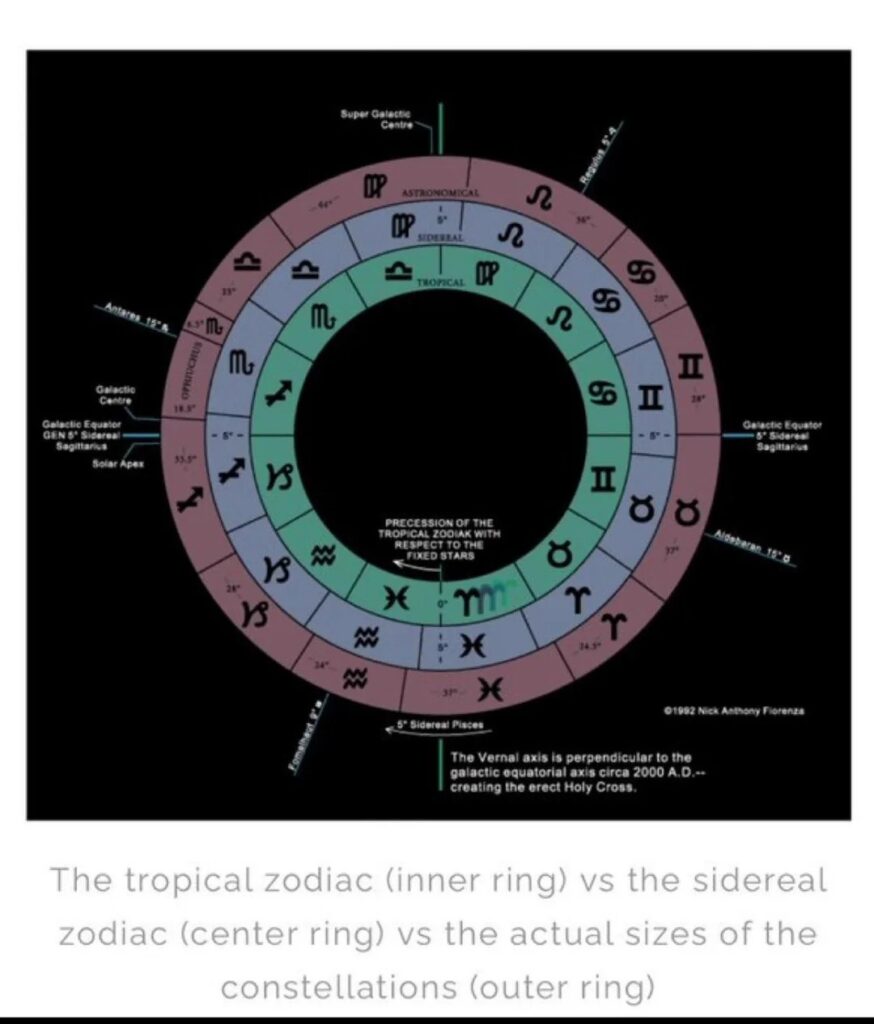
Because of the difference between these two zodiacs, the same astronomical position can have a different zodiac degree depending on which system is being used. The table in the source material uses a Lahiri ayanamsa of 23’51. This means that the Vedic and Western degree positions shown below are separated by approximately 23’51. This produces some fascinating results. For example, Ashwini occupies:
Vedic: Aries 0’00 – 13’20
Western: Aries 23’51 – Taurus 7’11
So although Ashwini begins at 0′ Aries in the Vedic zodiac, its corresponding Western/Tropical position begins at 23’51 Aries and continues into Taurus. This means that a Nakshatra can cross a Western zodiac sign boundary even though it remains within a single Vedic sign.
“In India today, modern families still look at the horoscopes of a couple when determining the quality of a potential marriage union. They won’t look at the sun signs but rather look at the moon sign and particularly the moon’s nakshatra or position in one of the 27 possible locations around the zodiac. This gives a more accurate insight into the personality of the individual. Western astrology is a poor imitation of the original Vedic Jyotish astrological art.
Remember that the Vedic literary references to Jyotish are still present in the original texts today, which are dated back about 5000 years. Show me any western astrologer who can claim such depth of reference, or literary backing to their speculations. At most the west goes back to Ptolemy around 2000 years ago, roughly. Thereafter, we have the Medieval alchemists and Arabic astrologers, who obtained their knowledge from the original Vedic source in India.
I have seen modern western astrologers abandon the western tropical planetary positioning, and only use the particular angles or aspects between the planets, without referring to the sign they are in. This makes their analysis geometrically accurate while removing the inaccurate zodiac sign reference from the analysis.
Add to that the need to also look at the fixed stars or constellations, and the planets alignments with them, within an orb of at most 2 degrees, to really understand the horoscope chart. Most western astrologers have little knowledge of the fixed stars. To use them accurately you have to concede to the literal original or astronomical positions of the planets in relation to the backdrop of fixed stars.” Source: julianhorack
The 27 Nakshatras: Vedic and Western Degrees
The following is a list of the complete 27 Nakshatras:
Ashwini
Vedic degrees: Aries 0’00 – 13’20
Western degrees: Aries 23’51 -Taurus 7’11
Symbol: Horse
Meaning: Star of Transport
Ashwini is associated with the power to heal self and others quickly. Its symbolism includes energy, movement and speed.
Bharani
Vedic degrees: Aries 13’20 – 26’40
Western degrees: Taurus 7’11 – 20’31
Symbol: Yoni
Meaning: Star of Restraint
Bharani represents the power of renewal and purification, including rebirth and transformation of the spirit.
Krittika
Vedic degrees: Aries 26’40 -Taurus 10’00
Western degrees: Taurus 20’31 – Gemini 3’51
Symbol: Knife
Meaning: Star of Fire
Krittika carries the power to cut through problems, burning through illusion in the pursuit of truth.
Rohini
Vedic degrees: Taurus 10’00 – 23’20
Western degrees: Gemini 3’51 – 17’11
Symbol: Red One / Ox
Meaning: Star of Ascent
Rohini is associated with the power to make things grow, including enjoyment, creative expansion and fertility.
Mrigashirsa
Vedic degrees: Taurus 23’20 – Gemini 6’40
Western degrees: Gemini 17’11 – Cancer 0’31
Symbol: Deer Head
Meaning: Star of Searching
Mrigashirsa represents the power to find fulfilment through wandering, exploration and the gentle search for truth.
Ardra
Vedic degrees: Gemini 6’40 – 20’00
Western degrees: Cancer 0’31 – 13’51
Symbol: Teardrop
Meaning: Star of Emotion
Ardra is associated with the power to feel and act, bringing stormy and passionate drive toward expression and understanding.
Punarvasu
Vedic degrees: Gemini 20’00 – Cancer 3’20
Western degrees: Cancer 13’51 – 27’11
Symbol: Arrows
Meaning: Star of Renewal
Punarvasu represents the power of life to regenerate and recover itself, bringing hope and the possibility of a new dawn.
Pushya
Vedic degrees: Cancer 3’20 – 16’40
Western degrees: Cancer 27’11 – Leo 10’31
Symbol: Cow Udder
Meaning: Star of Nourishment
Pushya is associated with the power to create spiritual energy, with themes of teaching, nourishment, guidance and wisdom.
Ashlesha
Vedic degrees: Cancer 16’40 – 30’00
Western degrees: Leo 10’31 – 23’51
Symbol: Snake
Meaning: Clinging Star
Ashlesha represents the powers of poison and medicine, including hypnotising the mind while transforming and healing afflictions.
Magha
Vedic degrees: Leo 0’00 – 13’20
Western degrees: Leo 23’51 – Virgo 7’11
Symbol: Throne
Meaning: Star of Power
Magha is connected with the power to leave the body and travel beyond this realm, honouring ancestral spirits and moving forward with respect and dignity.
Purva Phalguni
Vedic degrees: Leo 13’20 – 26’40
Western degrees: Virgo 7’11 – 20’31
Symbol: Foot of Bed
Meaning: Star of Fortune
Purva Phalguni represents the power of creation and family, together with love, enjoyment and ease.
Uttara Phalguni
Vedic degrees: Leo 26’40 – Virgo 10’00
Western degrees: Virgo 20’31 – Libra 3’51
Symbol: Head of Bed
Meaning: Star of Patronage
Uttara Phalguni represents the power to accumulate security, uphold sacred vows, and honour love and friendship.
Hasta
Vedic degrees: Virgo 10’00 – 23’20
Western degrees: Libra 3’51 – 17’11
Symbol: Hand
Meaning: Star of the Golden-Handed
Hasta is associated with the power to manifest one’s desires, handle things with skill and create through one’s abilities.
Chitra
Vedic degrees: Virgo 23’20 – Libra 6’40
Western degrees: Libra 17’11 – Scorpio 0’31
Symbol: Jewel
Meaning: Star of Opportunity
Chitra represents the power to accumulate merit and create wonderful new things through invention and creativity.
Swati
Vedic degrees: Libra 6’40 – 20’00
Western degrees: Scorpio 0’31 – 13’51
Symbol: Sword
Meaning: Star of Independence
Swati carries the power to scatter like the wind, with an emphasis on flexibility, freedom and self-inquiry.
Vishakha
Vedic degrees: Libra 20’00 – Scorpio 3’20
Western degrees: Scorpio 13’51 – 27’11
Symbol: Trident / Archway
Meaning: Star of Purpose
Vishakha represents the power to achieve many things in life, connecting with the will and drive of spirit.
Anuradha
Vedic degrees: Scorpio 3’20 – 16’40
Western degrees: Scorpio 27’11 – Sagittarius 10’31
Symbol: Lotus
Meaning: Star of Success
Anuradha is associated with the power of devotion and worship, and with succeeding through kindness, cooperation and devotion.
Jyeshtha
Vedic degrees: Scorpio 16’40 – 30’00
Western degrees: Sagittarius 10’31 – 23’51
Symbol: Umbrella / Eldest Sister
Meaning: Chief Star
Jyeshtha represents the power to conquer and gain courage, including rising up to overcome oppression.
Mula
Vedic degrees: Sagittarius 0’00 – 13’20
Western degrees: Sagittarius 23’51 – Capricorn 7’11
Symbol: Roots
Meaning: Foundation Star
Mula represents the power to transform from the root, destroying illusion in order to move beyond it.
Purva Ashadha
Vedic degrees: Sagittarius 13’20 – 26’40
Western degrees: Capricorn 7’11 – 20’31
Symbol: Elephant Tusk / Fan
Meaning: Invincible Star
Purva Ashadha is associated with the power to invigorate, energising the individual toward greater empowerment.
Uttara Ashadha
Vedic degrees: Sagittarius 26’40 – Capricorn 10’00
Western degrees: Capricorn 20’11 – Aquarius 3’51
Symbol: Elephant Tusk / Bed Planks
Meaning: Universal Star
Uttara Ashadha represents the power of complete victory, directed toward what the source describes as the highest good of all.
Shravana
Vedic degrees: Capricorn 10’00 – 23’20
Western degrees: Aquarius 3’51 – 17’11
Symbol: Ear
Meaning: Star of Learning
Shravana represents the power to connect through listening, gaining wisdom and deeper understanding from others.
Dhanishta
Vedic degrees: Capricorn 23’20 – Aquarius 6’40 “Planet: Mars
Meaning: “The Most Famous”, “The Swiftest”, “The Most Heard of”, “The Wealthiest”, “The Most Benevolent”
Indication: “The Star of Symphony”
Symbol: “A Drum” (Mridanga or Damaru of Lord Shiva), “A Bamboo Cane Flute” (Bansuri of Sri Krishna)
Shakti (Power): Khyapayitri Shakti (The Power to “Give Fame and Abundance”)
Basis Above: Birth
Basis Below: Prosperity”
Western degrees: Aquarius 17’11 – Pisces 0’31
Symbol: Drum
Meaning: Star of Symphony
Dhanishta carries the power to give fame and abundance, together with the ability to hear the music of infinite possibility.
Shatabhisha
Vedic degrees: Aquarius 6’40 – 20’00
Western degrees: Pisces 0’31 -13’51
Symbol: Circle
Meaning: Veiling Star
Shatabhisha is associated with the power of healing and secrets, cloaking life’s mysteries in mystery.
Purva Bhadrapada
Vedic degrees: Aquarius 20’00 – Pisces 3’20
Western degrees: Pisces 13’51 – 27’11
Symbol: Head of Bed / Blessed Foot
Meaning: Scorching Star
Purva Bhadrapada represents the power of breathing spiritual fire, rising from the ashes and awakening.
Uttara Bhadrapada
Vedic degrees: Pisces 3’20 – 16’40
Western degrees: Pisces 27’11 – Aries 10’31
Symbol: Foot of Bed / Blessed Foot
Meaning: Warrior Star
Uttara Bhadrapada represents the power to bring cosmic rain, surrendering to the flow of spiritual waters.
Planets and Pada of Uttara Bhadrapada
Saturn: Hard, cold, tough, dark, stiff, tight, rigid, resistant, slow, old, karmic law. Commitment, responsibility, obligation, duty, law & order, hard work, suffering, fear, waiting, patience, perseverance, systems, structures, organisation, administration, governance, legislation, labour, servants, conformity, survivalist, safety first, scarcity, conservation, elders, reality. Nervous system, skeletal structure, teeth, vata.
Pisces: Wet, deep, broad, dual, expansive, inclusive, sub-conscious, sleep, dreams, imagination, fantasy, distant, foreign, isolated, secluded, sanctuary, reclusive, universal, the universe, behind closed doors, expenditures, loss of consciousness, loss of vitality,
Pisces + Saturn: Spiritual path of sacrifice and renunciation. Saturn provides self discipline and self-control over their emotions and behaviour.
Revati
Vedic degrees: Pisces 16’40 – 30’00
Western degrees: Aries 10’31 – 23’51
Symbol: Drum
Meaning: Star of Wealth
Revati is associated with the power to nourish and transcend, including protecting and guiding a soul home.