“..before for any of you who has been watching my videos, yeah, I was doing the tropical zodiac. You know, and I have this is not a video about why I’m doing sideral now, but I will do one at some point. But yeah, I’ve been following the sideral for, I don’t know, maybe 10 years at least. Yeah, and for me, it’s more accurate, and there’s other reasons why, you know, I’ve done some more research recently, and it feels the right thing to do to switch.”
Seth (Egyptian Zodiac)
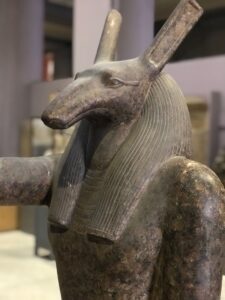
“Seth holds two spans in the modern twelve-deity birth calendar behind the site’s EGYPT chip: 28 May – 18 June and 28 September – 2 October. The bar glosses him as the red storm of the desert: the necessary rebel — a modern popular assignment, not an ancient one, but the phrase “necessary rebel” happens to catch something real that most retellings miss. The Egyptian name is Setekh or Sutekh, Greek Seth, and he is drawn as the Set animal: a canid-shaped creature with a long down-curved snout, tall squared-off ears and a stiff forked tail, which has never been identified with any living species and may never have been meant to be. His colour is red — the red of deshret, the desert beyond the fields, against Kemet, the black land. Red hair, red oxen and red ink for dangerous words all belonged to him. Source: https://www.agoramores.com/culture/zodiac/egyptian/seth-egyptian-zodiac”
South-Winter Solstice: Cold & Wet: Set Season has Capricorn (Capricorn is ruled by Saturn) Origins, it is the cold, the heart of the silence, the stillness when on the surface the earth looks barren, the trees are leafless, the crops have been harvested, the animals are quiet; it feels as if nothing is happening but beneath the soil something profound is happening. It is the season of root work, plants aren’t growing upward, they are growing deeper.
Set is a master of the material realm, a builder, a force that creates empires and boundaries, this energy teaches us through challenge, resistance and effort. This energy is like spiritual weight training where every difficulty that you face makes you stronger. Set represents the force and strength that we all need when life becomes difficult or unstable. Set rules over the desert and the wilderness; environments which only the strong endures. It is like going through winter but when spring return, the ones who honoured winter rise with the deepest roots. The time of Set is linked with the natural principles known in ancient Kemetic literature.
In Indian Jyotish astrology nakshatras system Pushya correspond to Set the Kemetic origin.
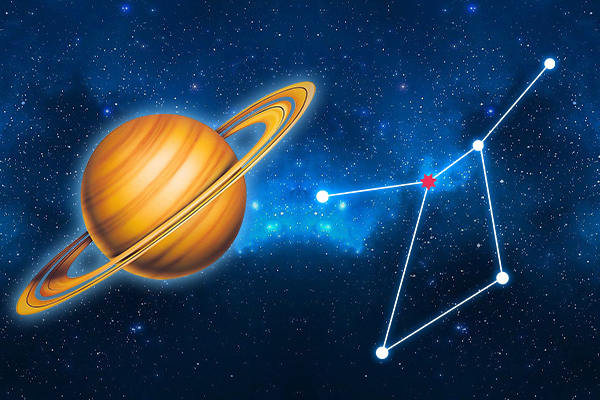
Pushya is ruled by Saturn. The nature of Pushya Nakshatra is one of the most auspicious, nourishing and positive nakshatra, it is ruled by Saturn. It is highly emotional, modest and has humility with a desire to serve. There are two ways to burn your past sins; chanting and serving others without any agenda. Pushya Nakshatra is about growth, to multiply, preserve, to strengthen and to replenish.
“Chanting the Hare Krishna mahamantra or any soothing mantra, vanquishes all the effects of sinful activities.” Sri Bhagvad Gita.
“Everybody can be great… because anybody can serve. You don’t have to have a college degree to serve. You don’t have to make your subject and verb agree to serve. You only need a heart full of grace. A soul generated by love.” Martin Luther King.
EGYPTIAN ASTROLOGY – DENDERAH ZODIAC
The first 24 hours clock comes from the 24 hands around the wheel.
Astrology =
Astro means Star,
Logy means Study of,
Astrology means Study of the Stars.
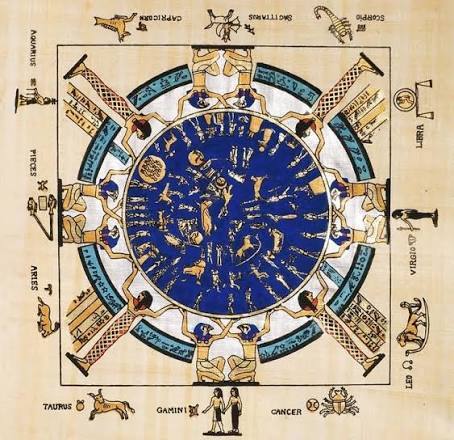
“In 1799, Napoleon and his armies were beginning to expand their presence throughout Egypt. Napoleon brought not only armies but artists to record sketches of his findings of a country that was considered exotic and out of the norm from traditional European culture. One particular artist, Vivant Denon, was fascinated by a full-fledged circular zodiac that was carved into the ceiling of The Temple of Hathor, located in the village of Dendera. After thoroughly sketching the circular zodiac, Denon returned to Paris and publicly released his findings. His report was published in a work that became massively popular in England and France, as everyone seemed to be hungry for more knowledge about this strange circular design in the temple.
Calendar of Confusion
Now referred to as the “Dendera Zodiac”, several of France’s greatest scientists, astronomers and mathematicians were in an uproar, trying to find the exact dates and times of the celestial events depicted within it. Physicists Joseph Fourier and Jean-Baptiste Biot alongside astronomer Johan Karl Burckhardt spearheaded the investigation, but were puzzled by the constellations depicted on the zodiac. Were they actual astronomical calculations depicting the movements of the stars, or were they merely symbolic representations? France was beginning its study into the world of archaeoastronomy.
The Dendera Zodiac is the only circular depiction of astronomy to be found within Egyptian antiquity. All other references to the zodiac or astrology are either square or pyramidal in shape and design. The zodiac itself depicts the 360 days of the Egyptian year, with thirty-six decans arranged in a circular fashion. A decan represents one-third of the duration of a zodiacal constellation. Twelve signs with three decans each means thirty-six decans in total. This is a metric that western astrologers continue to use to this day.
..Looking at the Dendera Zodiac, the ram of Aries corresponds with the ram-headed deity Amun. Taurus corresponds with Osiris, sometimes referred to as “The Bull of Eternity”, while the two fish of Pisces is signified by two crocodiles swimming in opposite directions. For every constellation in the traditional western zodiac, there is an Egyptian equivalent with the same symbolism; ranging from Khnum the goat with the same characteristics as Capricorn, to Atum, the lion-headed deity that bears resemblance to Leo. The image of Isis carrying Horus in her arms is synonymous with the constellation of Virgo, and bears resemblance to the image of the Virgin Mary carrying Jesus.
The important question remains; what were these symbols meant to convey, and what importance did the Ancient Egyptians place on them? For the Egyptians, each zodiac sign corresponded with a season of the year that was believed to be ruled over by a specific deity. The scarab beetle signifying Cancer was symbolic of summer, while the scales of Libra signified the autumnal equinox. You may notice that although all twelve of the constellations appear in the Dendera Zodiac, the placements of some are somewhat distorted and skewed. The crab of Cancer (Number 39 in the image) seems to have been deliberately placed towards the center of the zodiac, resulting in a spiral-like configuration of the zodiac. It is uncertain why this choice was incorporated into the design; the Cancer month may have held a particular significance.
To the Egyptians, each season had a unique effect on the passing of days within the 360-day calendar. The hours in a day were not measured in a static and fixed fashion, but were subject to change from season to season. The zodiac also depicted the movement of the star Sirius; a star of foremost importance to the Ancient Egyptians. Sirius rising from the horizon marked the beginning of the New Year, however this date would change by eight and a half days every thousand years. The sign of Aquarius was given great importance, as it represented the sign of inundation, signifying a time of flood. The Egyptians would use Sirius as a marker to indicate when the annual flooding of the Nile would occur, in what we would now call the month of June.
The Most Ancient Astronomy?
Without a doubt, Ancient Egyptians placed a great deal of importance on astronomy and the movement of the heavens, however, where did the construction of the zodiac itself fit on the timeline? Charles Dupuis, a pre-French Revolution scholar believed Egyptian astrology originated as far back as 14,000 years ago; 10,000 years earlier than the commonly accepted timeline of 4000 BC. Dupuis believed the Ancient Egyptians were miles ahead of the Ancient Greeks in their knowledge of astronomy, going to so far as to label the Greeks ‘children’ in comparison.
The Dendera Zodiac portrayed the ecliptic of the sun, which refers to the circular path of the sun’s orbit. The configuration of the patterns on the zodiac indicated a strange feature; the arrangement of the constellations shows a date that occurred at least 650 years prior to construction of the zodiac itself. The solstice between Gemini-Cancer shows the position of an ecliptic that should have existed in 650 BC. French scholars believed the Dendera Zodiac to be thousands of years older than the Biblical date of creation. This undoubtedly troubled the church, whose beliefs were at risk of being turned upside down because of this strange new artifact. Jean-Francois Champollion, France’s most prominent Egyptologist during the reign of Napoleon, was able to rectify the date of the zodiac’s creation. He examined the hieroglyphic cartouches that were adjacent to the zodiac, and traced the royal names to a period of time ranging between 100-20 BC, which was either the late Ptolemaic or Augustan time period. Champollion’s opinion carried a great deal of weight, given that he was the first to decipher the hieroglyphics on the infamous Rosetta Stone. The Pope was so grateful for Champollion’s revision that he offered to make him a Cardinal within the church, despite him being an atheist. Why Was Astronomy So Important?” Continue reading at source: A Circular Egyptian Mythology: Does the Dendera Zodiac Represent the Most Ancient Astronomy? By Tashi Alexander Javed
To Give YOU Nourishment:
“Homage to you, Ra, who is the lord, the lord of truth, the only one, the lord of eternity and maker of infinity,
I have come before you, lord Ra; I have made the seven cows and their bull to flourish.
You who have gifts of bread and beer for the glorified spirits, may you give also to my soul with you.
He comes into being under your hindquarters, and is like one among you for ever and ever, and he is glorified in the beautiful West by the Osiris Ani, true of voice.
O Beautiful Power, beautiful rudder of the northern sky
O Encircler of the Sky, Leader of the Two Lands, beautiful rudder of the western sky
O Glorious One at the Head of the Temple of the Holy Icons, beautiful rudder of the eastern sky
O One at the Head of the Temple of Sand, beautiful rudder of the southern skyO gods above the earth, leaders in the netherworld
O mother-goddesses above the earth in the underworld, in the house of Osiris, in the house of Osiris
O gods who lead the holy land above the earth, leaders of the netherworld
O followers of Ra in the following of Osiris”Source: The Papyrus of Ani, Translated by Neil Parker.